• Welcome to Photrio!
    Registration is fast and free. Join today to unlock search, see fewer ads, and access all forum features.
    Click here to sign up

Tri-Color... Cyanotype

22897.jpg

A
22897.jpg

  • 0
  • 0
  • 11
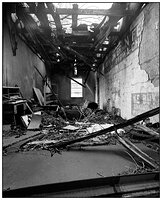
Abandoned Grain Silo 1

H
Abandoned Grain Silo 1

  • 0
  • 0
  • 26

Forum statistics

Threads
204,390
Messages
2,867,858
Members
102,248
Latest member
krviger
Recent bookmarks
0
Another final version of the print, but with cadmium yellow this time. It definitely allowed me to print other colors darker, resulting in a more saturated print. But I still think it's possible to improve colors with iron hydroxide as well.

Nice! I like this more than the previous one. However, it would be indeed nice if similar results can be obtained with iron hydroxide.
 
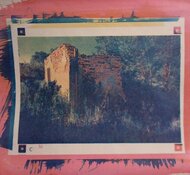
I experimented with nickel salt toning, and the color performance was excellent. However, because I didn't clean up the residual nickel acetate properly during the toning process, the paper also got stained red.
IMG_20250507_001850.jpg
IMG_20250507_001840.jpg
 
I experimented with nickel salt toning, and the color performance was excellent. However, because I didn't clean up the residual nickel acetate properly during the toning process, the paper also got stained red.
View attachment 398053View attachment 398054

Congratulations!
I wash paper for at least 10 minutes in warm water to clean the paper. But in other cases, the results are the same. After washing it won't have such a deep dark magenta color, but it will be a nice magenta anyway.

If you find a way to clean paper faster, feel free to share it with us
 
I experimented with nickel salt toning, and the color performance was excellent. However, because I didn't clean up the residual nickel acetate properly during the toning process, the paper also got stained red

What did you do differently this time because you said earlier that Nickel Acetate toning didn't work.

I attempted to soak the sample in nickel acetate, but after overnight immersion, no color change was observed.

Adding a little bit of trisodium citrate to the wash water can help in clearing Nickel residue more effectively.
 
What did you do differently this time because you said earlier that Nickel Acetate toning didn't work.

Initially, I hypothesized that nickel toning might share the same mechanism as copper toning (i.e., replacing iron ions in Prussian blue), so I directly applied the copper toning method but observed no significant color change. Based on OP's later description, the actual mechanism likely involves:

  1. Adsorption: Prussian blue preferentially adsorbs nickel ions from the solution;
  2. Decomposition: Alkaline conditions degrade Prussian blue, releasing the adsorbed nickel ions;
  3. Color formation: Free nickel ions react with dimethylglyoxime to form the characteristic pink-red nickel dimethylglyoxime complex.
 
Finally, it was successful, but the yellow color of the iron hydroxide was too light, making it difficult to be clearly shown in the picture.
三色蓝晒测试.jpg
 
Finally, it was successful, but the yellow color of the iron hydroxide was too light, making it difficult to be clearly shown in the picture.
View attachment 398888

Congratulations! I find it's more useful make double coating for iron hydroxyde layer. And besides that, it's probably even better to make two layers of yellow in that case.
 
If you find a way to clean paper faster, feel free to share it with us

I've discovered a more effective method for removing nickel ions from paper. By soaking the paper in a mixed solution of citric acid and sodium ferric EDTA, nickel ions can be efficiently eliminated, significantly reducing the high-light pollution in the red layer.
IMG_20250523_223609(1).jpg
 
That's definitely like that. And that's what I'm working on currently.

I definitely don't recommend using trisodium phosphate for yellow, because it's even less yellow than iron hydroxide. But I currently calibrate the colors to be used with iron hydroxide, so it could be a least more acceptable to use for most of people. Hopefully, I'll figure out a safer and good yellow later.

About nickel: I tried using nickel acetate, it worked. Just don't forget that replacing iron with nickel us the first step. Later I convert it into nickel dimethylglioximate, which is a nice magenta pigment. And you can also discard your nickel solution by converting it into this complex, which is stable and insoluble. I mean, it's even used as a pigment in lipsticks, so it's definitely safe.

The entire process you've created is extremely interesting indeed. Really fantastic work, the nickel/dimethylglyoxime toning is a brilliant idea. I've got all the required chemicals here, I'll definitely be attempting this when I find some time.

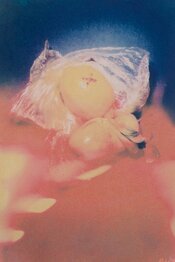
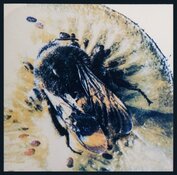
If I may, I offer my discovery of a yellow toning method for you to try that might be of use in your search for a cadmium replacement. Below is an example of how it looks before and after toning. Sorry for such a poor test subject, I used a failed print for this trial.
20260403_134733.jpg
20260403_184921.jpg


This was achieved by putting the cyanotype print in a 0.3% w/v solution of Sodium phytate for around an hour. Which is probably rather longer than needed as it changes colour quite quickly. I've also not done any work on finding an optimal concentration of Sodium phytate, this was just a "feels like enough" type test. The yellow colour appears to be permanent, my initial tests from over 2 years ago are still the same colour as when I did them.

 
The entire process you've created is extremely interesting indeed. Really fantastic work, the nickel/dimethylglyoxime toning is a brilliant idea. I've got all the required chemicals here, I'll definitely be attempting this when I find some time.

If I may, I offer my discovery of a yellow toning method for you to try that might be of use in your search for a cadmium replacement. Below is an example of how it looks before and after toning. Sorry for such a poor test subject, I used a failed print for this trial.
View attachment 421462View attachment 421463

This was achieved by putting the cyanotype print in a 0.3% w/v solution of Sodium phytate for around an hour. Which is probably rather longer than needed as it changes colour quite quickly. I've also not done any work on finding an optimal concentration of Sodium phytate, this was just a "feels like enough" type test. The yellow colour appears to be permanent, my initial tests from over 2 years ago are still the same colour as when I did them.

Thank you!
I've already got improved yellows, just used an x2 concentrated cyanotype solution, bleached in a 10% solution of potassium carbonate, with an addition of hydrogen peroxide in the end. It gives a pretty much decent yellow color.

For a brighter (less saturated though) version I used a 5% solution of trisodium phosphate, with an addition of hydrogen peroxide in the end as well.

I'll try your method as well, if it actually gives us iron phytate, then its color could be somehow different from the ones I was able to get. Any non-toxic versions of yellows are always welcome.
 
One of my recent prints. I used iron phosphate for the yellow as it's brighter than iron hydroxide and looks better for lemons. Iron hydroxide would give them a specific look, just like they were made of clay.
 

Attachments

  • IMG_20260330_190639.jpg
    IMG_20260330_190639.jpg
    334.2 KB · Views: 95
I actually enjoy the colors here. And the blacks just look so deep. Sometimes it's kinda hard to imagine that color cyanotypes can be that bright and clear.

A thick layer of bleached cyanotype for yellows (potassium carbonate + hydrogen peroxide)
 

Attachments

  • I_9nSM-QXqxMS46ZuF4c5YXrpvRB_MYBQbx2HNAVlq5G45ZPsTU2y56m4V0TVUmgtYxgEz14KukxjesvTRzPFyo--1.jpg
    I_9nSM-QXqxMS46ZuF4c5YXrpvRB_MYBQbx2HNAVlq5G45ZPsTU2y56m4V0TVUmgtYxgEz14KukxjesvTRzPFyo--1.jpg
    648.9 KB · Views: 105
I actually enjoy the colors here. And the blacks just look so deep. Sometimes it's kinda hard to imagine that color cyanotypes can be that bright and clear.

A thick layer of bleached cyanotype for yellows (potassium carbonate + hydrogen peroxide)

That's a nice one demonstrating what the process is capable of. Well done!
 
I actually enjoy the colors here. And the blacks just look so deep. Sometimes it's kinda hard to imagine that color cyanotypes can be that bright and clear.

A thick layer of bleached cyanotype for yellows (potassium carbonate + hydrogen peroxide)

Incredible! I loved the lemon print but this one is my new favourite. Your method has brought cyanotypes to a new level. I'll look forward to seeing more.
 
Incredible! I loved the lemon print but this one is my new favourite. Your method has brought cyanotypes to a new level. I'll look forward to seeing more.

Thank you very much!
I definitely agree the process gives a lot of opportunities for creating stunning prints. I'm planning to work on colors a bit more, still hoping there's a better and non-toxic yellow. Maybe there's even a way to give the blues at least a bit of cyanish tint.

I'm pretty much satisfied with the results and it doesn't take a lot of time to make the prints, as a bonus
 
Tried to print something on a cheap cellulose-based paper sheet. It works if you dilute your cyanotype solutions for each layer, except for yellow. Still requires some calibrations, but I'm getting quite nice muted colors.
 

Attachments

  • IMG_20260409_002647.jpg
    IMG_20260409_002647.jpg
    409.7 KB · Views: 97


I've finally made a tri-color cyanotype process tutorial. I hope it's going to be useful for you guys!
 
Great work and congratulations for both the results and the video.

What are your thoughts on adding a K layer with a lead acetate toned Cyanotype layer? It's not a perfect black, but should be interesting nevertheless. Does lead acetate toning affect adversely any of the previous layers?
 
Great work and congratulations for both the results and the video.

What are your thoughts on adding a K layer with a lead acetate toned Cyanotype layer? It's not a perfect black, but should be interesting nevertheless. Does lead acetate toning affect adversely any of the previous layers?

Thank you very much!

I have a much better way to produce the K layer. As well as I have other plans to develop this method.

I'm currently testing it with my student

Just waiting for my printer to arrive, so I don't have to spend money for halftone negatives anymore
 
I've discovered a more effective method for removing nickel ions from paper. By soaking the paper in a mixed solution of citric acid and sodium ferric EDTA, nickel ions can be efficiently eliminated, significantly reducing the high-light pollution in the red layer.
View attachment 399224

This is great! I’m having the same problem with magenta polluting the highlights and the paper, even after cleaning thoroughly. I have a couple of questions regarding the specifics - What are the proportions of chemicals in the citric acid/sodium ferric EDTA solution. Also, when do you introduce this bath in your process? Is it between the two toning baths or after you have completed both? Thanks for any guidance!
 
This is great! I’m having the same problem with magenta polluting the highlights and the paper, even after cleaning thoroughly. I have a couple of questions regarding the specifics - What are the proportions of chemicals in the citric acid/sodium ferric EDTA solution. Also, when do you introduce this bath in your process? Is it between the two toning baths or after you have completed both? Thanks for any guidance!

I just wash it for around 10 minutes in warm tap water. Zero tinting mostly. My paper base is just white.

Be careful with using acid baths between the two toning baths. You can wash off some of your nickel ending up with an orange color, not magenta
 
This is great! I’m having the same problem with magenta polluting the highlights and the paper, even after cleaning thoroughly. I have a couple of questions regarding the specifics - What are the proportions of chemicals in the citric acid/sodium ferric EDTA solution. Also, when do you introduce this bath in your process? Is it between the two toning baths or after you have completed both? Thanks for any guidance!

Thank you for your detailed question. I'm glad to know this information is helpful. Regarding the specific proportions, I unfortunately don't have the exact formula at hand at the moment, as I've recently moved and it's been a while since I last worked with this process. However, I recall that the concentrations for both the citric acid and sodium ferric EDTA typically fall within the range of 1% to 3%.


As for the sequence, the correct step is to immerse the print in this solution afterthe nickel toning bath and beforeproceeding to the final toning bath.


I hope this provides some clarity. If you experiment with it, I'd be curious to hear about your results. Good luck
 
I just wash it for around 10 minutes in warm tap water. Zero tinting mostly. My paper base is just white.

Be careful with using acid baths between the two toning baths. You can wash off some of your nickel ending up with an orange color, not magenta

Thank you. I’ll definitely keep that in mind (about the acid baths).
 
Thank you for your detailed question. I'm glad to know this information is helpful. Regarding the specific proportions, I unfortunately don't have the exact formula at hand at the moment, as I've recently moved and it's been a while since I last worked with this process. However, I recall that the concentrations for both the citric acid and sodium ferric EDTA typically fall within the range of 1% to 3%.


As for the sequence, the correct step is to immerse the print in this solution afterthe nickel toning bath and beforeproceeding to the final toning bath.


I hope this provides some clarity. If you experiment with it, I'd be curious to hear about your results. Good luck

Thanks! I appreciate the detail. Lightfire mentioned the risk of using an acid at this point in the process, so I’ll play with your process and see if I can find a good balance - perhaps starting with a 1% solution and seeing whether that helps. Stay tuned…
 
Thank you for your detailed question. I'm glad to know this information is helpful. Regarding the specific proportions, I unfortunately don't have the exact formula at hand at the moment, as I've recently moved and it's been a while since I last worked with this process. However, I recall that the concentrations for both the citric acid and sodium ferric EDTA typically fall within the range of 1% to 3%.


As for the sequence, the correct step is to immerse the print in this solution afterthe nickel toning bath and beforeproceeding to the final toning bath.


I hope this provides some clarity. If you experiment with it, I'd be curious to hear about your results. Good luck

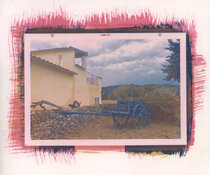
Thanks again! I've added a 5 minute wash of sodium ferric EDTA (1%) with an equal part of citric acid (1%) between the two magenta toning baths and it seems to have resolved my problem of pink highlights. I'm very happy with the result (attached).
 

Attachments

  • provence cart cyanotype.jpg
    provence cart cyanotype.jpg
    568.8 KB · Views: 6
Photrio.com contains affiliate links to products. We may receive a commission for purchases made through these links.
To read our full affiliate disclosure statement please click Here.

PHOTRIO PARTNERS EQUALLY FUNDING OUR COMMUNITY:


Ilford ADOX Freestyle Photographic Stearman Press Weldon Color Lab Blue Moon Camera & Machine
Top Bottom