• Welcome to Photrio!
    Registration is fast and free. Join today to unlock search, see fewer ads, and access all forum features.
    Click here to sign up

MSA O/N Aug/September 2022 - "New Topographics photography"

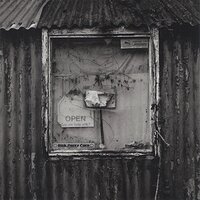
Old shed

Old shed

  • 1
  • 0
  • 4
Marloes

A
Marloes

  • 1
  • 0
  • 7

Forum statistics

Threads
204,383
Messages
2,867,722
Members
102,241
Latest member
leoxiaowoniu
Recent bookmarks
0
If you have good work: let them coming!
It is always useful and interesting for the viewers to get some more information with the photos, such as place, date, camera, lens, film, development, paper/print type, why and how etc. etc, Thanks.

OK, I promise this is the last one I'm going to add to this thread. Getting a bit carried away, but it's my favorite style of photography...

kuOjo1Jh.jpg
 
Last edited:
Just happened that this photo of mine, Drive-In Box Office, Santa Monica Airport was chosen to be in PhotoSC's upcoming Everyday Landscape show.
Hy6, 50mm, HP5+ @ 160 in Rodinal.

SMO Drive-In Box Office rescan.jpg
 
Just happened that this photo of mine, Drive-In Box Office, Santa Monica Airport was chosen to be in PhotoSC's upcoming Everyday Landscape show.

That's great! "Everyday Landscape" would seem to be similar to "New Topographics" -- just less pretentious sounding.
 
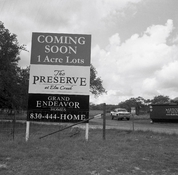
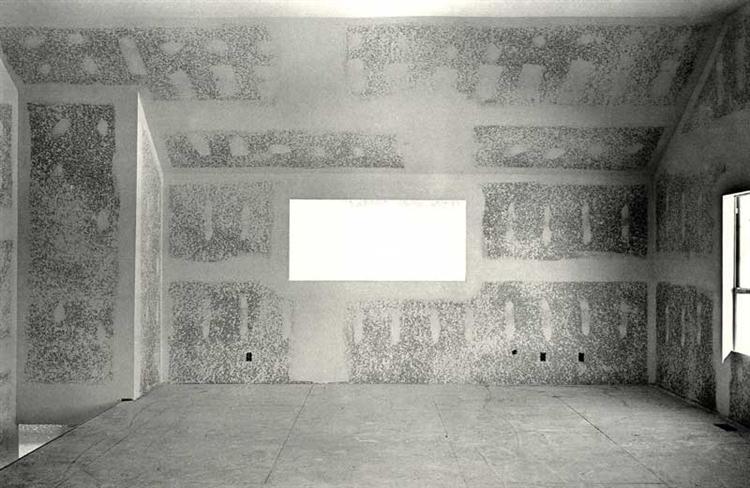
I live in one of the fastest growing parts of the United States. My spin on this MSA is going to be, “man alerting landscapes”. Over the past several years, rural farmland and wooded hill country have given way to subdivisions. More are underway and soon to be underway. I took these shots yesterday.

(Agfa Super Isolette with 1991 dated Tmax 400. HC-110 developed negative scans)
 

Attachments

  • August 2022 MSA 01.jpg
    August 2022 MSA 01.jpg
    780 KB · Views: 156
  • August 2022 MSA 02.jpg
    August 2022 MSA 02.jpg
    922.3 KB · Views: 165
  • August 2022 MSA 03.jpg
    August 2022 MSA 03.jpg
    793.6 KB · Views: 156
That's great! "Everyday Landscape" would seem to be similar to "New Topographics" -- just less pretentious sounding.

I find it interesting that we don't really want to come to grips with the actual meaning of New Topographics. It's a very specific concept and not simply everyday landscapes, although I do like that idea as a stand-alone style.
 
I find it interesting that we don't really want to come to grips with the actual meaning of New Topographics. It's a very specific concept and not simply everyday landscapes, although I do like that idea as a stand-alone style.

"Photographs of a man-altered landscape" is pretty straightforward. No one here has a problem with the actual meaning of "New Topographics", exactly - but no one here is showing photos that were in the original exhibition. Perhaps someone here has - who knows who all these people actually are - but no one is posting his actual photo from the exhibition.

So what was so special about "New Topographics" that differentiates it from something like "Everyday Landscapes" (which I assume would be mostly human-altered landscape, since most people don't spend "everyday" in the virgin wilderness (there is almost none - humans have lived all over this planet and changed things))?

Is it that "New Topographics" was about the industrialization of the landscape? How it had been taken over by factories, warehouses, suburbs, and parking lots? Because that's not very special.

Is it the particular perspective of the photos? The lack of humans? That it's black and white (except when it's colour)? If any of those things, in what way is it different from what's been posted in this thread? Why is it special?
 
Is it that "New Topographics" was about the industrialization of the landscape? How it had been taken over by factories, warehouses, suburbs, and parking lots? Because that's not very special.

I think the documentation, commentary and even beauty of the human-altered landscape is what makes it special. The fact that those photographers and their "school" took the time to see something in what most would pass by is special. I find most traditional landscape photography to be boring. I'd rather have a painting.
 
"Photographs of a man-altered landscape" is pretty straightforward. No one here has a problem with the actual meaning of "New Topographics", exactly - but no one here is showing photos that were in the original exhibition. Perhaps someone here has - who knows who all these people actually are - but no one is posting his actual photo from the exhibition.

So what was so special about "New Topographics" that differentiates it from something like "Everyday Landscapes" (which I assume would be mostly human-altered landscape, since most people don't spend "everyday" in the virgin wilderness (there is almost none - humans have lived all over this planet and changed things))?

Is it that "New Topographics" was about the industrialization of the landscape? How it had been taken over by factories, warehouses, suburbs, and parking lots? Because that's not very special.

Is it the particular perspective of the photos? The lack of humans? That it's black and white (except when it's colour)? If any of those things, in what way is it different from what's been posted in this thread? Why is it special?

It's not that it's so special, but it is specific.
 
I think the documentation, commentary and even beauty of the human-altered landscape is what makes it special. The fact that those photographers and their "school" took the time to see something in what most would pass by is special. I find most traditional landscape photography to be boring. I'd rather have a painting.

I meant what makes "New Topographics" special as opposed to "human-altered landscape". I'm not saying it's not valuable - I'm asking what differentiates it from "everyday landscape" if "everyday landscape" is itself human-altered.

It's not that it's so special, but it is specific.

That is not an answer. It's a rewording. So, here: what, specifically, differentiates it?
 
I meant what makes "New Topographics" special as opposed to "human-altered landscape". I'm not saying it's not valuable - I'm asking what differentiates it from "everyday landscape" if "everyday landscape" is itself human-altered.


That is not an answer. It's a rewording. So, here: what, specifically, differentiates it?

Nothing, really. "New Topographics" is just the term and title coined for a specific exhibition.
 
It is worthwhile to read the Wikipedia article on "New Topographics", in particular William Jenkins' description of the images: https://en.wikipedia.org/wiki/New_Topographics
I would suggest that the reference in that article to "often capturing the tension between natural scenery and the mundane structures of post-war America" is accurate.
 
The best way to understand the concept would be to look at the catalog and read the text.
 
The best way to understand the concept would be to look at the catalog and read the text.

Wouldn't it be easier for you just to say what you mean?

At this point, the photos that made up the exhibition "New Topographics" are subject to a posteriori judgment based on what the totality of that exhibition was understood to be at the time and during the intervening years - so they cannot be seen, by anyone who has knowledge of that, as just being themselves. Yet none of those photographers set out to take those photos with a rubric in hand - other than their own particular interest. In other words, they weren't taking part in "New Topographics" - it was coalesced from apparent similarities in theme from their otherwise banal photos.

Or is it something more?
 
Definitely not about a "rubric," but rather a spontaneous development,
 
FWIW, I read Arthurwg's post as recommending that people "look at the catalog and read the text".
In fact, I tried to find some of the catalog on the Internet for just that purpose.
There is a lot written about the New Topographics exhibition. In most writing that I have seen, the common theme is that the exhibition evidenced an important evolution in landscape photography that was happening at the time - organically and in a not particularly organized and systemic way. In essence, the exhibition showed what was happening all on its own.

 
I think what's missing in this thread, and, perhaps, what Arthurwg is alluding to, is the social and political comment that was an essential part of that first wave of "New Topography" photographers.

Ingrained in the esthetics of the "movement"—actually more a coincidence of people working on the same thing at the same time—was a critique of the American Dream, which had shifted its focus from the east in the 19th Century to expansion in the American West in the early 20th Century, and which manifested itself in an aggressive "taking over" of the territory: boomtowns, tract houses, highways, exploitation of natural resources, airports (the ultimate metaphor for the idea that there are no longer any "frontiers"), ever-expanding suburbia, industrial development replacing agriculture, etc.

"New Topography" was about witnessing a slow disaster taking place, about the end of natural wilderness being replaced by "man-made wilderness." It was about documenting (hence the use of the word "topography"), in a very unsentimental way, this new "man-altered" landscape by showing both the landscape and its "alteration", metaphorically (as when Robert Adams pushes the mountains in the background) when not directly.

That what is now seen as "new topographics" has evolved into "everyday landscapes" in which more often then not only man-made constructions are shown, without any or few visual reference to what has been "altered," how it is altered, and the tension between the two, is a interesting, albeit puzzling development. Another bizarre aspect is that we often see labeled as "new topographics" photographs of older, at times abandoned structures (an old diner, gas station, etc.), while the original "new topographics" were shooting new structures, such as Lewis Baltz and Robert Adams' tract houses.

What's fascinating about these facts is that while today's "new topographics" has little to do with the original "new topographics" photographers, it is a throwback to a much further temporal and esthetic reference: Walker Evans' "lyrical documentary" style.

FWIW, I read Arthurwg's post as recommending that people "look at the catalog and read the text".
In fact, I tried to find some of the catalog on the Internet for just that purpose.
There is a lot written about the New Topographics exhibition. In most writing that I have seen, the common theme is that the exhibition evidenced an important evolution in landscape photography that was happening at the time - organically and in a not particularly organized and systemic way. In essence, the exhibition showed what was happening all on its own.
 
"New Topography" was about witnessing a slow disaster taking place, about the end of natural wilderness being replaced by "man-made wilderness." It was about documenting (hence the use of the word "topography"), in a very unsentimental way, this new "man-altered" landscape by showing both the landscape and its "alteration", metaphorically (as when Robert Adams pushes the mountains in the background) when not directly.

This is echoed in an article by Kelly Dennis that appeared in American Suburb X entitled "New Topographics: Landscape and the West - Irony and Critique in New Topographic Photography". In it the author states:

...while New Topographic photographs appear to be of western landscapes, trees, deserts, houses, roads, and construction, they are nonetheless about the aesthetic discourse of landscape photography, and about “a man-made wilderness”: that is, they are about the American myths of the West, suburban expansion, the American dream, and the exploitation and destruction of natural resources.

 
This is echoed in an article by Kelly Dennis that appeared in American Suburb X entitled "New Topographics: Landscape and the West - Irony and Critique in New Topographic Photography".

Thanks for reminding me of this fine (albeit a tad academic) article. I read it a while back, but obviously more than I thought stayed with me (couldn't for the life of me remember where I took that beautifully evocative idea of "man-made wilderness"). That said, these ideas are also present in many of Robert Adams' writings as well as in Lewis Baltz's essays, in particular his review of Adams' The New West, in which he states:

Conceived in expedience for the sole purpose of turning a quick buck, hopelessly dependent on the automobile, new non-cities have disposed themselves formlessly along
the frontage roads of most of our Interstate Highways. Posing an ecological threat that is only now being taken into account, the sprawl-city is as hostile to genuine urbanism as it is to the land it recklessly consumes. For as much as the landscape is deformed by the encroaching suburban juggernaut, traditional urban (i.e. civilized) values are equally under attack; American civil culture, never so very deep, disappears if spread too thin.

Adams shows us how ephemeral these man made structures seem to be and how uneasily they rest on Colorado’s high plains: trailer parks and tract houses that promise no bulwark against the arid and inhospitable land they occupy so uneasily.


The New West is a unique and valuable contribution...; thus far no other book has so compellingly demonstrated the mutuality of intrusion between the landscape and its inhabitants, or so clearly shown why we should be paying attention. “Why open our eyes anywhere but in undamaged places like national parks? ... We also need to see the whole geography, natural and man-made ...”
 
Another bizarre aspect is that we often see labeled as "new topographics" photographs of older, at times abandoned structures (an old diner, gas station, etc.), while the original "new topographics" were shooting new structures, such as Lewis Baltz and Robert Adams' tract houses.
Good point. "Post new topographics" is a term that isn't used but could have meaning for this, i.e. after the flimsy boom comes the bust. If someone were to use that term I would know what to expect in the photographic concept.
 
Thanks for reminding me of this fine (albeit a tad academic) article. I read it a while back, but obviously more than I thought stayed with me (couldn't for the life of me remember where I took that beautifully evocative idea of "man-made wilderness"). That said, these ideas are also present in many of Robert Adams' writings as well as in Lewis Baltz's essays, in particular his review of Adams' The New West, in which he states:

Conceived in expedience for the sole purpose of turning a quick buck, hopelessly dependent on the automobile, new non-cities have disposed themselves formlessly along
the frontage roads of most of our Interstate Highways. Posing an ecological threat that is only now being taken into account, the sprawl-city is as hostile to genuine urbanism as it is to the land it recklessly consumes. For as much as the landscape is deformed by the encroaching suburban juggernaut, traditional urban (i.e. civilized) values are equally under attack; American civil culture, never so very deep, disappears if spread too thin.

Adams shows us how ephemeral these man made structures seem to be and how uneasily they rest on Colorado’s high plains: trailer parks and tract houses that promise no bulwark against the arid and inhospitable land they occupy so uneasily.


The New West is a unique and valuable contribution...; thus far no other book has so compellingly demonstrated the mutuality of intrusion between the landscape and its inhabitants, or so clearly shown why we should be paying attention. “Why open our eyes anywhere but in undamaged places like national parks? ... We also need to see the whole geography, natural and man-made ...”

That reminds me of offroading. Pavement or asphalt is a waste of good hard earned taxpayer money. :whistling:
 
Photrio.com contains affiliate links to products. We may receive a commission for purchases made through these links.
To read our full affiliate disclosure statement please click Here.

PHOTRIO PARTNERS EQUALLY FUNDING OUR COMMUNITY:


Ilford ADOX Freestyle Photographic Stearman Press Weldon Color Lab Blue Moon Camera & Machine
Top Bottom